We have never been more connected. And somehow, never more alone.
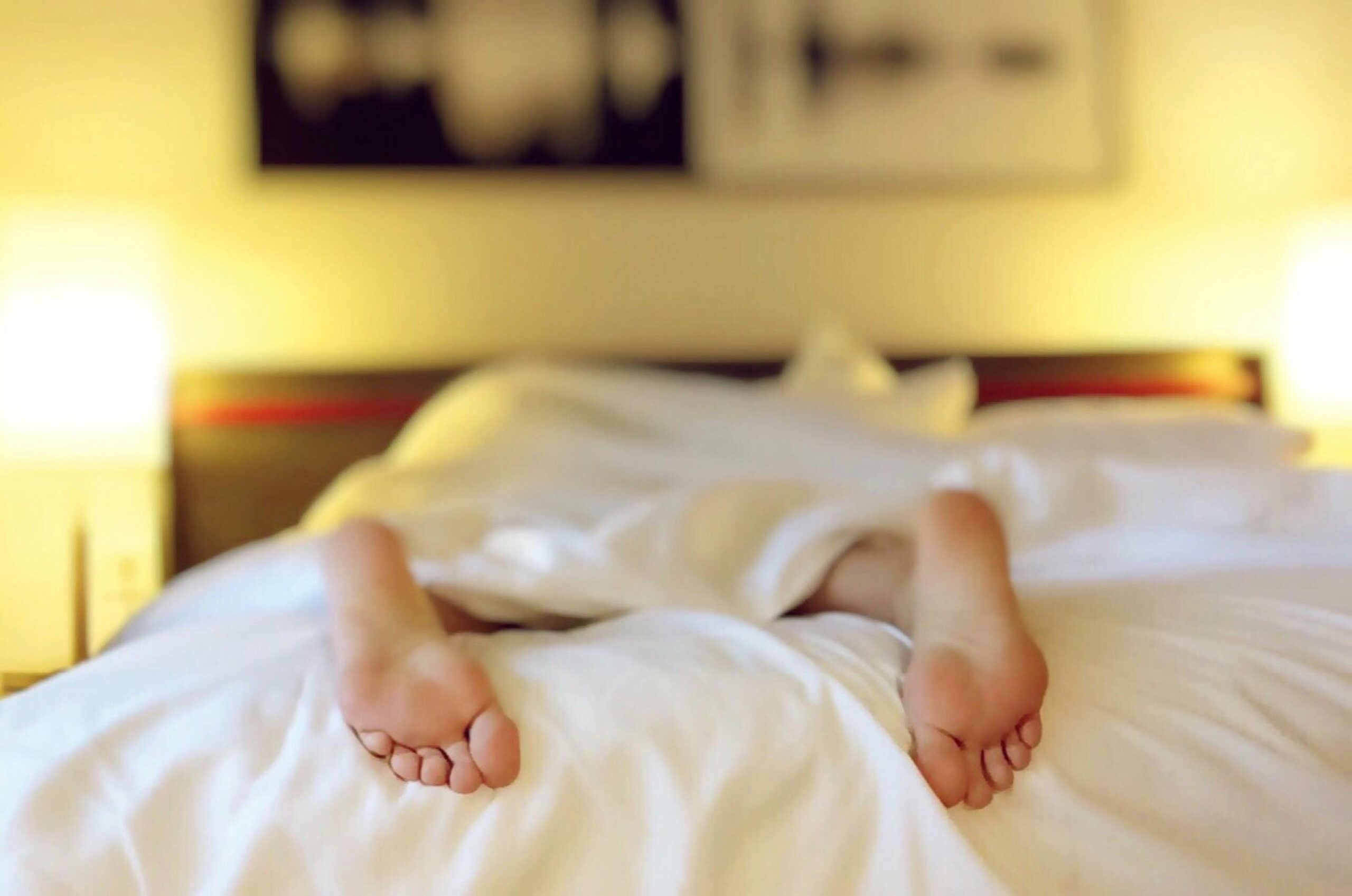
It’s midnight. You’re wiped out, your whole body begging for sleep. Then your head hits the pillow and your brain lights up like a switchboard. That familiar, maddening state: “I’m exhausted, but I can’t sleep.”
For years, that was every single night of my life. I was working 9, 10 hours a day at a laptop, chasing the world as a digital nomad. I called it freedom. My biology called it a bill, and it was coming due.
Today, between endless scrolling and a constant drip of AI-driven noise, we live in a permanent dopamine spike. And that spike whispers one thing to our DNA: “Stay awake. There’s an emergency.”
The result is a biological short circuit. Your body lives in 2026. Your DNA is still a hunter-gatherer who needs darkness and silence to repair itself.
So forget the usual advice. With a background in biology and nutrition, I want to walk you through what actually quieted the noise in my own head, where science and spirituality finally pulled in the same direction, and where I started sleeping again.
What is digital insomnia, and why won’t your brain shut off?
To understand why you can’t fall asleep, look at what happens behind your eyes. Stare at a screen at night and you set off a genuine biochemical short circuit:
- Blue light. Screens fire off frequencies that hit the photoreceptors in your retina and send a false alarm to your body clock, a tiny structure called the suprachiasmatic nucleus.
- Melatonin, blocked. Your brain is tricked into thinking it’s high noon, so it slams the brakes on your rest hormone.
- Cortisol, spiking. Under a barrage of notifications and reels, your body pumps out more cortisol, and you land in full biological alert. Exhausted, but wired.
The “digital vampirism” draining your neurotransmitters
What you are dealing with goes deeper than tiredness. Call it neurochemical depletion. Endless scrolling fires a dopamine loop that overloads your nervous system, while artificial light feeds on your melatonin like a vampire. That imbalance keeps your brain out of its deepest sleep stages (REM and delta), stranding you in a foggy half-sleep that restores neither body nor spirit.
The link between insomnia, stress and a troubled gut
Here’s something I noticed early on: so many of my clients with irritable bowel also slept terribly. That’s no accident. Chronic stress, a sluggish vagus nerve and insomnia feed each other in a vicious loop.
The vagus nerve runs your parasympathetic nervous system, the “rest and digest” side of you. When it’s underactive, it shows up as:
- Insomnia and waking through the night
- Digestive trouble, like irritable bowel
- Anxiety and thoughts that go in circles
- A mind you just can’t switch off
How sleep changes in the digital age
Parameter | Natural Sleep | Sleep With Screens |
|---|---|---|
Melatonin | High, at dusk | Blocked by blue light |
Cortisol | Lowest at night | High (alert) |
Brain Activity | Delta waves | Beta waves |
Waking Up | Regenerated | Mental fog (brain fog) |
REM | Vivid | Fragmented |
Digital detox for better sleep: how to reset your nervous system
Beyond the usual sleep tips, you have to send your brain a signal that it’s safe. And the fastest route runs through your senses.
Touch and the earth: grounding
Sit at a desk all day and your body builds up static charge, marinating in a constant hum of electromagnetic fields (EMF).
Research in the Journal of Environmental and Public Health (1) suggests that direct skin contact with the earth, known as grounding, lets electrons flow from the ground into your body, mopping up free radicals and steadying cortisol.
Can’t walk barefoot through the woods before bed? Slip an earthing mat under your sheets. It is about the closest you can get to planting roots in your own bedroom floor.

Beyond sleep aids: how scent resets your limbic system
Smell is the only sense that wires straight into your limbic system, the control room for emotion and memory, and the machinery of deep sleep.
And I don’t mean “a nice fragrance”. I mean the pharmacokinetics of terpenes, which is almost more of a mouthful than the suprachiasmatic nucleus.
Linalool and sesquiterpenes: the natural chemistry of calm
If you want natural remedies for insomnia that actually do something, plant biochemistry has a few precise tools:
- Linalool, from lavender. It speaks straight to the circuits of deep relaxation.
- Sesquiterpenes, from vetiver. They help the nervous system downshift, working a little like a gentle natural anxiolytic.
A quick science note: vetiver really is a “root”, biochemically speaking. It grounds a racing mind, quieting the overthinking machine that keeps you staring at the ceiling.
The shaman’s touch: put one drop of pure essential oil on your wrists and the soles of your feet. Breathe in slow and deep. You’re sending a chemical “all clear” to your adrenal glands.
One tip: use standardized, high-grade essential oils. The quality of the molecule is what your limbic system actually responds to.
Binaural frequencies: a backdoor out of digital insomnia
Buzzing notifications and constant scrolling push your brain into high Beta waves, the frequency of high alert. To sleep, you need to coax it down into Delta waves, the frequency of deep rest.
There’s a name for this nudge: entrainment.
Low-frequency binaural tones, or “brown noise” (deeper and rounder than white noise), gently walk your neurons off to sleep.
How to use them properly:
- Aim for frequencies around 3Hz to encourage the two hemispheres to sync
- Skip Bluetooth headphones (radio signals, right next to your brain)
- Use a good speaker at low volume, or bone-conduction headphones
- Listen for 15 to 30 minutes before bed

Green allies: supplements for a hyper-connected soul
When digital stress has hijacked your nervous system, willpower won’t cut it. You need specific molecules to help your body find the off-ramp. As a former biologist, I chose these allies for two reasons: strong bioavailability and targeted action.
Magnesium bisglycinate: your nervous system’s brake pedal
Plenty of people take magnesium. Few realize the form is everything. Magnesium bisglycinate is bound to two molecules of glycine, an amino acid that helps it slip across the blood-brain barrier.
- The science: unlike citrate (which tends to send you running to the bathroom), bisglycinate goes to work on deep muscle relaxation, dialing down the jittery neuron activity you get from too much screen time.
Passionflower & California poppy: plants for a mind that won’t quit
These two are for anyone who wakes at 4am with the gears already turning.
- Passionflower: holds compounds that may nudge the GABAergic system, your body’s built-in relaxation switch.
- California poppy (Eschscholzia): helps you stay asleep through the night, heading off those early wake-ups driven by cortisol spikes.
How to fire up your vagus nerve for sleep: the “total shutdown” protocol
If your mind flickers like a neon sign at midnight, here’s your evening survival kit, a somatic protocol to calm the sympathetic nervous system, wake up the vagus nerve and kill the digital loop. Run it for 14 to 21 days and your body starts to relax on its own.
1. The sanctuary and the “dive reflex” (10 minutes)
Rule one: treat your bedroom like a sacred space.
Blue LEDs? Gone. Red bulbs or candles? In. Phone? Across the room, at least.
- Biophysical reset: fill a bowl with cold water (10 to 15°C). Inhale, hold, and dunk your face for 20 seconds. The mammalian dive reflex hands your nervous system an instant reset.
- What the science says: 2024 research (2) shows the dive reflex drops your heart rate on the spot (vagal bradycardia). In plain terms, the mental neon flickers off.
- Shaman’s touch: live near the sea? Crack the window. If not, a diffuser with vetiver oil will leave you as anchored as a Zen monk.
2. Progressive relaxation and vagal humming (15 minutes)
Lie down. Work from your feet up to your head: tense each muscle for 5 seconds, then let go for 15.
- Sound boost: on every exhale, hum low. Those vibrations stimulate the vagus nerve mechanically.
- 2026 evidence: RCT data (3) confirms that progressive relaxation plus humming lifts your heart rate variability (HRV) more than breathing alone. You sleep deeper, and you stay asleep.
3. Coherent breathing at 6 bpm (10 minutes)
Breathe in time with your heart: in for 5 seconds, out for 5, nose only, no pauses.
- Why it works: six breaths a minute maxes out parasympathetic activity, exactly what you need to defuse digital stress.
- Feeling anxious? Switch to 4-7-8 for a longer, deeper exhale.
4. Analog brain dump (10 minutes)
Pen, paper. Write three things you’re grateful for, or just everything rattling around your skull.
- The dopamine angle: writing by hand quiets an overactive prefrontal cortex and burns off the dopamine you stockpiled while scrolling. Trading bits (digital) for atoms (paper) feels like coming home.
5. Vagal ear stimulation (10 minutes)
Lie back or sit comfortably. Massage your earlobe gently: 30 seconds a side, alternating.
- Pro option: got a taVNS device? Run it on low for 5 to 10 minutes.
- Shaman’s touch: working the tragus and lobe hits points close to those in auricular acupuncture, grounding your energy and guarding your sleep like a silent sentry.
6. Mindfulness body scan (10 to 15 minutes)
Travel from your feet to your head, noticing sensation, tension or warmth without judging any of it. Breathe into each spot to let it go. Finish by picturing a warm, golden light wrapping around you.
7. Closing ritual (5 to 10 minutes)
Give your brain a clear “day is over” signal, a small ritual that ushers you toward sleep.
Brew a warm, caffeine-free infusion:
- Chamomile
- Valerian
- Lemon balm
- Linden
Sip it slowly, fully present. Every sip is a small act of care for yourself.
FAQ: your most common questions about digital insomnia
Why am I sleepy but can’t fall asleep, even when I’m exhausted?
Because your body is tired while your nervous system is still on high alert. Too much screen time suppresses melatonin and keeps cortisol elevated, so you’re stuck with the engine running even though the battery is dead.
Are sleep supplements addictive?
Natural supplements like magnesium bisglycinate, passionflower and California poppy don’t create physical dependence the way sleep medications can. Still, treat them as temporary support while you fix the root causes: a real digital detox, and some patient attention to your vagus nerve and your evenings. And always check in with a healthcare professional first.
Can irritable bowel really mess with my sleep?
Absolutely. The gut-brain axis runs largely through the vagus nerve. When that nerve is underactive from digital stress, digestive issues (like irritable bowel) and sleep problems tend to show up together. Two sides of the same coin.
How do I detox from screens if I work at a computer all day?
A digital detox is simpler than going cold turkey. Carve out a few deliberate “disconnection windows” across your day:
- No screens for 2 hours before bed (the golden rule)
- Blue-light glasses after 6pm
- Night mode on every device
- A 10-minute break every 90 minutes at the screen
- Swap evening scrolling for something analog, a paper book or a proper conversation, anything with no screen in it
What do I do if I wake at 3am with my mind racing?
If you’re awake and can’t drop off again within 20 minutes:
- Don’t check the clock (it only breeds anxiety)
- Don’t grab your phone (that makes it worse)
- Get up and move to another room with dim light
- Do coherent breathing (6 breaths a minute) for 5 to 10 minutes
- Do the vagal ear massage
- Head back to bed only once sleep starts creeping in again
Reclaim your darkness
We live in an age that has declared war on the dark.
We’re soaked in a light that never goes out, the glow of screens and the pull of endless expectation, and somewhere along the way we were sold the lie that stopping is dangerous.
But here’s the truth I found on the way from the biology lab to the forest trail: there is no healing without darkness.
Silence is where your cells quietly do their repair work. So read your digital insomnia for what it really is: a protest, not a fault in your body. Your nervous system is asking you to come home, to unplug from the world and reconnect with yourself.
So switch off the light. Let the world shout out there while you find your breath in here. Your darkness is precious.
Protect it.
This article is for informational purposes only and is not a substitute for the advice, diagnosis or treatment of a qualified physician. Always consult your doctor before starting any supplement or making major changes to your health habits.
¹ James L. Oschman et al., “Earthing: Health Implications of Reconnecting the Human Body to the Earth’s Surface Electrons”, Journal of Environmental and Public Health, 2012, article ID 291541, https://doi.org/10.1155/2012/291541 (accessed 28/01/2026).
² J. G. Mitchell et al., “The role of cognition as a factor regulating the diving responses of animals, including humans”, Journal of Experimental Biology, 227/20 (2024), e246472, https://doi.org/10.1242/jeb.246472 (accessed 28/01/2026).
³ A. Author et al., “Effects of slow-paced breathing and humming breathing on heart rate variability and affect: a pilot investigation”, Physiology & Behavior (2025). https://pubmed.ncbi.nlm.nih.gov/40482984/