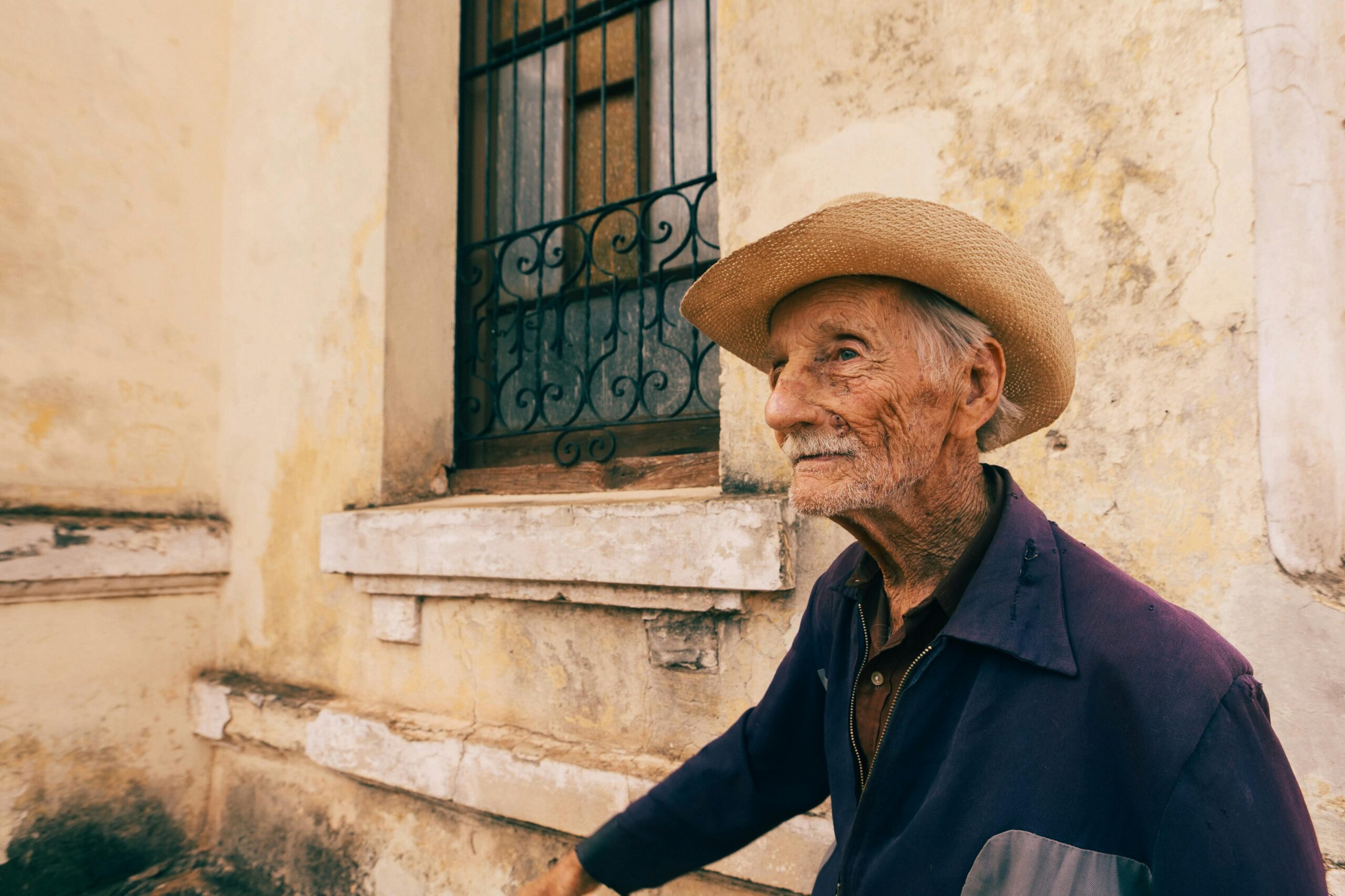
There’s a village in Sardinia where men live, on average, longer than anywhere else on the planet.
There’s no biohacking involved, and no cabinet full of 200-euro-a-month supplements or trend-of-the-month longevity protocols.
They walk uphill and take their meals slowly. They laugh in good company, and in the evening they sit outside to watch the sunset, in no hurry at all.
The area is called Ogliastra, in the heart of Sardinia, and it’s one of the world’s five Blue Zones: places where the concentration of centenarians runs up to 10 times higher than the Western average¹.
The question isn’t “how do they live so long?” The real question is what have the rest of us stopped doing.
What natural longevity really is (and why it’s not just genes)
When we think about longevity, we think DNA. But genetics explains only 20 to 25% of how long you live². The rest comes down to how we live: what we eat, how we move, how much we sleep, which relationships we tend.
It’s what researchers call healthspan: not how many years you’ll live, but how many of them you’ll live in good health.
In 2016, Dan Buettner, the researcher who mapped the Blue Zones with National Geographic, published a study in the American Journal of Lifestyle Medicine identifying the nine behaviours shared by centenarians across every Blue Zone, from Sardinia to Okinawa, from Nicoya (Costa Rica) to Ikaria (Greece)². He called them the Power 9.
Not one of these behaviours is complicated. None of them needs technology. They are, quite simply, ancestral rituals that modern life made us forget.
Longevity isn’t reached by adding something to your life. You reach it by stopping the slow removal of what was already there.
The 5 Blue Zones: where time slows down
| Blue Zone | Where | What sets it apart |
|---|---|---|
| Ogliastra, Sardinia | Italy | Highest concentration of male centenarians in the world |
| Okinawa | Japan | The longest-living women on the planet. Home of ikigai (a reason for being) |
| Nicoya | Costa Rica | Mortality rate at 60 is 50% below average |
| Ikaria | Greece | Dementia is almost non-existent after 90 |
| Loma Linda | California, USA | Adventist community, living 10 years longer than the American average |
What these places share has nothing to do with climate, ethnicity or wealth. It comes down to a way of living that weaves together body, mind, community and a relationship with nature.
The science behind longevity: telomeres, inflammation and stress
Before we get to the rituals, it’s worth understanding what speeds up ageing at the biological level.
Three main mechanisms:
1. Telomere shortening
Telomeres are the “protective caps” at the ends of your chromosomes. With every cell division they get a little shorter. When they get too short, the cell stops working. This is our biological clock³.
But the speed at which they shorten isn’t fixed. Chronic stress, sitting all day, an inflammatory diet and social isolation burn through them faster. Meditation, exercise and deep relationships, on the other hand, protect them³.
2. Chronic low-grade inflammation
Researchers call it inflammaging: a silent inflammation that produces no obvious symptoms but wears down your tissues year after year. It’s tied to cardiovascular disease, diabetes, Alzheimer’s and accelerated ageing.
3. Chronic stress and cortisol
Chronic stress keeps the HPA axis switched on around the clock, with chronically high cortisol. The outcome is inflammation, a weakened immune system and disrupted sleep, a silent accelerator of ageing.
The Blue Zone rituals act on all three of these mechanisms. Not by chance, but because they’re the fruit of thousands of years of embodied wisdom.
7 ancestral Blue Zone rituals for natural longevity
These are habits observed in centenarians and validated by scientific research, not throwaway “wellness tips”.
1. Move naturally, not in a gym
The centenarians of the Blue Zones don’t run marathons or hold gym memberships. Instead, they move constantly at low intensity: walking uphill, working the vegetable patch, kneading bread, herding goats.
A study in The Lancet showed that movement woven into daily life, even without structured “exercise”, cuts all-cause mortality by 28 to 35%⁴.
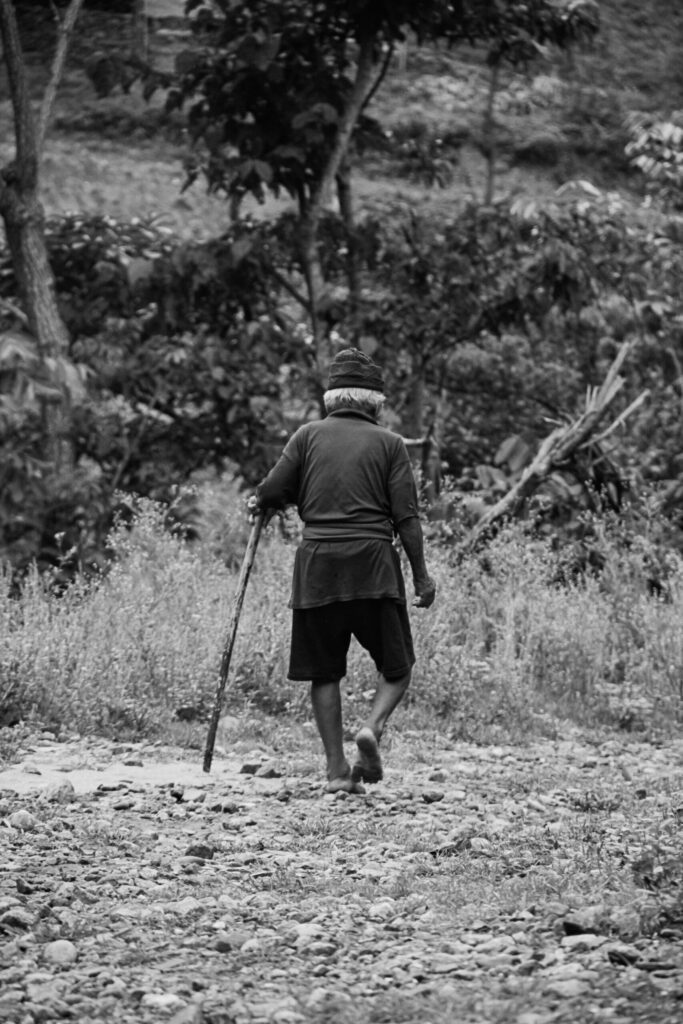
In Sardinia, the shepherds of Ogliastra cover an average of 8 to 12 km a day over hilly ground. They’d never call it training. It’s just living.
Sciamanoverde tip: you don’t need a gym. Walk when you can, take the stairs, tend a garden, even a single pot of herbs on the balcony. Ancestral movement is the kind that threads through life rather than interrupting it.
2. The 80% rule: stop eating before you’re full
In Okinawa they call it hara hachi bu: eat until you’re 80% full. It’s a Confucian mantra the centenarians recite before every meal.
It’s not a diet. It’s a ritual of presence.
Moderate calorie restriction is one of the most robust mechanisms in longevity research. It lowers inflammation, improves insulin sensitivity and activates the sirtuins, proteins linked to cellular repair and long life.
The gap between 100% and 80% fullness? Around 300 calories a day. Over the long run, that’s the difference between ageing fast and ageing slow.
3. The anti-inflammatory diet of the centenarians
Across every Blue Zone, the food shares common traits that modern research confirms as deeply anti-inflammatory:
| Element | What they eat | Why it works |
|---|---|---|
| Plant-based | 95% of the diet is plant-based: legumes, whole grains, vegetables | Fibre, polyphenols and antioxidants lower inflammaging |
| Legumes every day | Beans, lentils, chickpeas, at least half a cup a day | Linked to a 7 to 8% drop in mortality per 20g a day |
| Meat, rarely | Meat 4 to 5 times a month, in small portions | Reduces oxidative stress and inflammatory load |
| Wine in moderation | 1 to 2 glasses a day, always with meals, in company | In Sardinia, Cannonau carries 3x the polyphenols of other reds |
| Herbs and spices | Rosemary, mugwort, wild oregano, turmeric | Powerful natural anti-inflammatories and sirtuin activators |
In Sardinia, the traditional bread is pane carasau, made with ancient durum wheat and sourdough. In Okinawa, the staple is the purple sweet potato, loaded with anthocyanins. In Greece, wild herbs gathered on the hills are part of every single meal.
You don’t need to overhaul your diet. You need to go back to eating like our grandparents did.
4. Have a purpose: ikigai and a reason to get up in the morning
In Okinawa they call it ikigai. In Costa Rica, plan de vida. In Sardinia it has no name, it’s simply the way people live: having a role, a function, a contribution to the community right up to the last day.
A study by the National Institute on Aging found that people with a strong sense of purpose carry a 15% lower mortality risk, regardless of age⁹.
We’re not talking about grand missions. An Okinawan centenarian’s ikigai might be tending the garden, looking after the grandchildren, or making tea for the neighbours.
The question to ask yourself isn’t “what’s the meaning of life”, but something far smaller: what do I get up for tomorrow morning?
5. The rest ritual: handle stress before it turns chronic
People in the Blue Zones feel stress too. The difference is that they have daily rituals to discharge it before it builds up.
In Sardinia, it’s the aperitivo in the piazza. In Okinawa, it’s prayer at the ancestors’ altar. In Greece, it’s the afternoon nap.
The science backs it up: a 2019 meta-analysis in Psychoneuroendocrinology showed that regular contemplative practices, meditation, prayer, conscious breathing, lower cortisol levels and systemic inflammation.
Forest bathing is one of the most powerful forms of this ritual: 20 minutes in the woods lowers cortisol, blood pressure and heart rate.
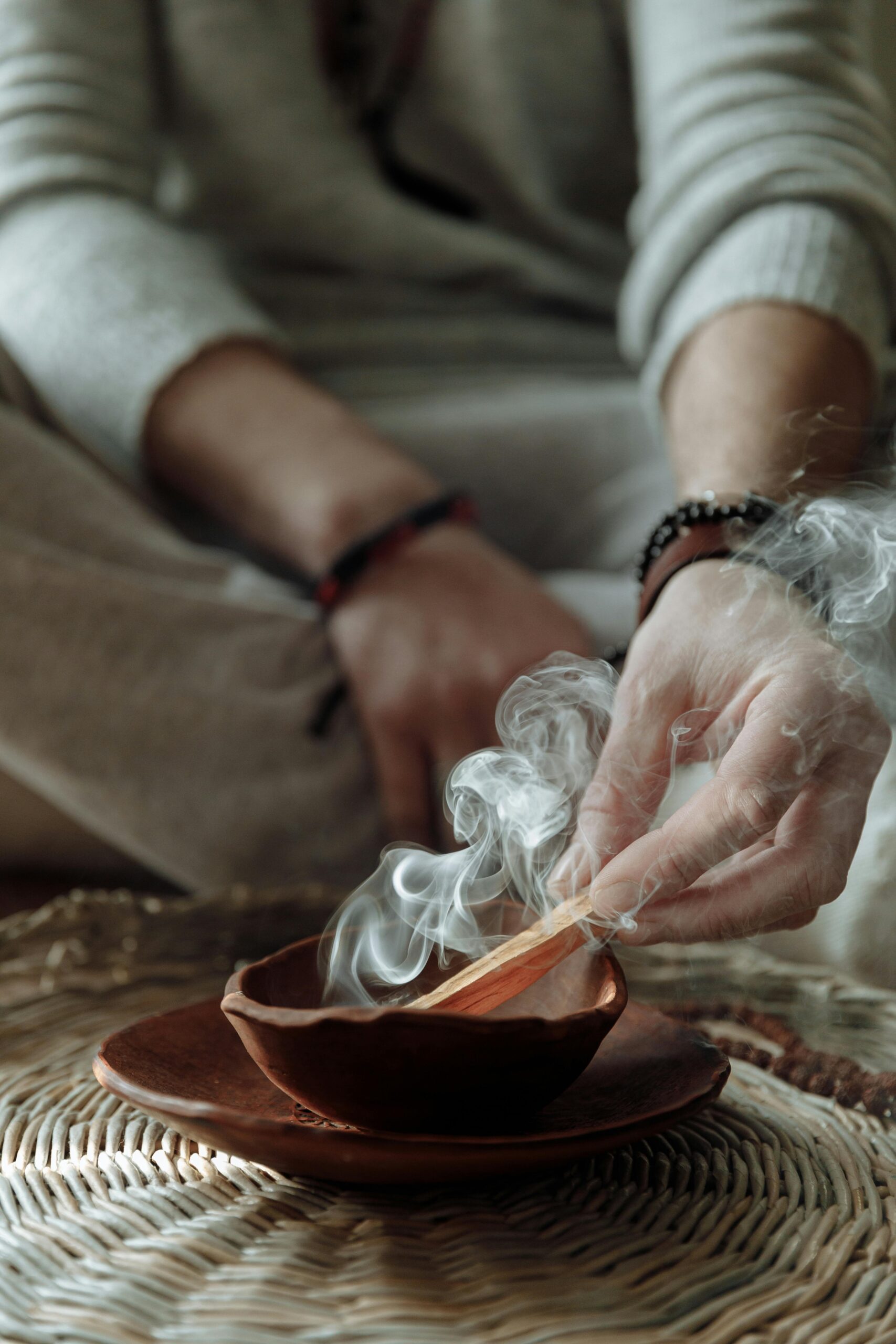
Sciamanoverde tip: it doesn’t matter what shape your anti-stress ritual takes. It could be a silent walk, five minutes of conscious breathing, or burning a little sage or palo santo in the evening. What matters is that it’s daily, intentional and protected from interruptions.
6. Belong: spirituality as nourishment
Of the 263 centenarians Buettner interviewed across the Blue Zones, 258 belonged to a spiritual or religious community². The faith itself didn’t matter: Catholic in Sardinia, Shinto in Okinawa, Orthodox in Ikaria, Adventist in Loma Linda.
Research shows that taking part in a spiritual community adds 4 to 14 years of life expectancy. Not through divine intervention, but through measurable mechanisms: less stress, social support, a sense of belonging, shared rituals.
In an age when many have walked away from traditional religion, you don’t so much need to “believe in something” as to belong to something: a practice circle, a meditation group, a community of people who share deep values.
7. The right relationships: the tribe that lengthens your life
The centenarians of Ogliastra don’t live alone. They live surrounded by family, neighbours, lifelong friends. Grandparents aren’t packed off to care homes, they’re the centre of the family.
In Okinawa there are the moai: groups of five friends formed in childhood who support each other for life. They meet regularly, share resources, look out for one another.
None of this is sentimental. It’s plain biology.
Social isolation raises mortality risk by 26%, more than obesity and about the same as smoking 15 cigarettes a day⁵. Deep, steady relationships do the reverse: they lower inflammation, protect telomeres and bring down baseline cortisol.
Sciamanoverde tip: build your own moai. You don’t need five people, two or three you share a path with will do. Meet regularly, and not only online. Human contact is the oldest longevity ally there is.
A daily longevity ritual: my suggestion
You can’t move to Sardinia (or maybe you can). But you can carry the Blue Zone principles into your day, one ritual at a time.
| Moment | Ritual | Blue Zone behind it |
|---|---|---|
| Morning | Ask yourself: “What do I get up for today?” (ikigai) | Okinawa |
| Breakfast | Fresh herbs, whole grains, seasonal fruit | Ikaria |
| Movement | Walk for 30 minutes, uphill if you can | Sardinia |
| Lunch | Legumes + vegetables. Stop at 80% full (hara hachi bu) | Okinawa |
| Afternoon | A 20-minute break: rest, nature or conscious breathing | Greece / all |
| Evening | A light dinner, early. Time with people you love | Sardinia / Nicoya |
| Before sleep | Gratitude, silence, a ritual that closes the day | All Blue Zones |
None of these gestures costs money, technology or extra time. They ask for just one thing: the decision to slow down.
The secret that isn’t a secret
I spent years hunting for the longevity “secret” among supplements, protocols and biohacking. Then I looked at the Sardinian centenarians, and something simple clicked.
They added nothing to their lives. They took nothing away. They simply kept living the way people always had: in connection with the land, the seasons, the people around them.
Natural longevity is less a finish line than a return.
A return to the movement your body already knows, to the food the earth offers, and to the relationships and rituals that give a day its rhythm.
And maybe the first step isn’t adding a new supplement. Maybe it’s taking something away. A notification. A rush. A meal eaten standing up.
The time you win back is life. And life, lived with intention, has a natural way of stretching out.
Scientific sources
- Poulain, M. et al. (2004). Identification of a geographic area characterized by extreme longevity in the Sardinia island. Experimental Gerontology, 39(9), 1423-1429.
- Buettner, D. & Skemp, S. (2016). Blue Zones: Lessons From the World’s Longest Lived. American Journal of Lifestyle Medicine, 10(5), 318-321.
- Blackburn, E.H. & Epel, E.S. (2012). Telomeres and adversity: Too toxic to ignore. Nature, 490, 169-171.
- Ekelund, U. et al. (2019). Dose-response associations between accelerometry measured physical activity and sedentary time and all cause mortality. The BMJ, 366:l4570.
- Holt-Lunstad, J. et al. (2015). Loneliness and Social Isolation as Risk Factors for Mortality: A Meta-Analytic Review. Perspectives on Psychological Science, 10(2), 227-237.